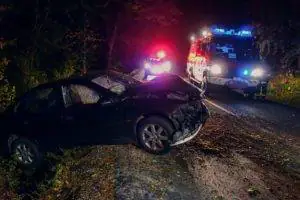


 When a commercial vehicle is involved, the claim is rarely “Driver A hit Driver B.” It’s usually a chain of decisions made by multiple people and multiple companies, dispatch, scheduling, equipment maintenance, loading, supervision, and compliance.
Andrew Pickett Law approaches commercial crash cases with one guiding assumption: the driver may be liable, but the driver is rarely the only liable party. That mindset matters in Brevard County, where serious collisions on I‑95, US‑1, Eau Gallie Blvd, and Wickham Road can involve delivery vehicles, box trucks, 18‑wheelers, and subcontracted carriers moving freight in and out of Central Florida.
The legal strategy is not complicated in theory. It’s disciplined in execution: identify every responsible party, preserve the evidence before it disappears, and build the case as if it will be tried, not merely “discussed.” Andrew Pickett Law is led by former prosecutor Andrew Pickett, and the firm’s own background emphasizes a trial-focused approach developed in Brevard County, FL.
Why is a commercial crash case different from a regular car accident claim?
A passenger vehicle crash usually involves:
- Two drivers
- Two insurance policies
- A dispute about fault and injuries
A commercial crash can involve:
- A driver and a motor carrier (often different legal entities)
- A tractor owner and a trailer owner
- A broker or shipper setting delivery constraints
- A maintenance provider with service records
- Electronic logging data, telematics, and retained compliance documents
And behind all of it: layered insurance. Federal rules require minimum levels of financial responsibility for many “for-hire” motor carriers of property, and those minimums can be significantly higher than typical auto coverage.
If you treat a commercial crash like a standard car accident claim, you tend to do two things wrong:
- You aim too low on responsibility.
- You move too slowly on evidence.
Call Andrew Pickett Law in Melbourne today to schedule your free consultation at (321) 503-4014.
Need free legal help in Florida?
We specialize in personal injury claims.

Who can be liable besides the truck driver?
1) The motor carrier operating under authority
One of the first questions we ask is: Who had operating authority over the load at the time of the crash? The name on the truck is not always the legal entity responsible for operations.
This is where insurance and authority filings matter. FMCSA explains that filings such as BMC‑91 or BMC‑91X are used to make liability filings with the agency as proof of bodily injury and property damage coverage.
In plain terms, we’re not just looking for a logo. We’re looking for the entity that was supposed to be insured, compliant, and accountable.
2) The employer or controlling business
Some drivers are employees. Some are labeled “independent contractors.” In either situation, control and documentation matter:
- Who assigned the route?
- Who set the delivery window?
- Who enforced (or ignored) safety policies?
- Who tracked performance and discipline?
Commercial crashes often involve pressure, tight schedules, long miles, and real consequences for late deliveries. When that pressure contributes to unsafe driving, liability can extend beyond the cab.
Need free legal help in Florida?
We specialize in personal injury claims.

3) The owner of the tractor or trailer
Ownership is a frequent blind spot. In trucking, equipment is often leased, sub-leased, or owned by a separate entity from the carrier.
Trailer issues in particular can be critical:
- brake problems
- lighting failures
- tire conditions
- load securement and balance
If the trailer owner (or a maintenance contractor) failed to keep the equipment safe, that becomes part of the liability analysis.
4) Maintenance and repair vendors
When a commercial vehicle fails mechanically, we want more than a verbal explanation. We want records:
- inspection reports
- maintenance logs
- repair invoices
- parts orders
- out-of-service notes
A crash caused by poor brakes or worn tires is not “bad luck.” It’s a preventable failure, and preventable failures create accountability.
5) The shipper, loader, or freight handler
Improper loading can cause:
- rollovers
- jackknifes
- load shifts that change stopping distance
- trailer sway or instability
If cargo was loaded dangerously, or securement rules were ignored, the loading party may be part of the liability picture.
6) Brokers and contracting layers
Brokers and freight intermediaries may try to make the case look simple: “We just connected parties.” Sometimes that’s true. Sometimes documents show deeper involvement in carrier selection, scheduling, and operational constraints.
The correct approach is evidence-driven. Contracts, dispatch communications, and load records tell the story that phone calls won’t.
What evidence helps identify every liable party?
This is where commercial cases are won or lost: evidence preservation. The reason is simple, commercial evidence often has retention cycles, and some records don’t live forever.
For example, federal regulations require a motor carrier to retain records of duty status and supporting documents for a period of not less than six months from the date of receipt.
Six months can disappear quickly when someone is:
- recovering from hospitalization
- trying to return to work
- dealing with vehicle replacement
- waiting for an insurer to “review” the file
That’s why early legal intervention matters in commercial crashes.
Key categories we target early
- Driver logs and hours-of-service support documents
- Dispatch records and delivery schedules
- Telematics/GPS pings
- Vehicle inspection and maintenance records
- Load documents (bill of lading, weigh tickets, securement notes)
- Employment/qualification and training records
- Insurance/authority identity documentation
Not every case needs every category. But serious injury cases need enough documentation that a defense team can’t shrink the event into a two-paragraph summary.
Not sure where to start? Andrew Pickett Law is here to guide you. Call (321) 503-4014.
How does Andrew Pickett Law actually investigate a commercial crash?
A strong investigation has phases. We don’t rely on one “big moment.” We build the case like a timeline.
Phase 1: Immediate stabilization and preservation
- Identify key entities (driver, carrier, owner, contractors)
- Send preservation demands to prevent loss of logs/telematics/video
- Secure basic incident documentation (photos, witnesses, 911 references)
Phase 2: Coverage and authority confirmation
We confirm the carrier identity and coverage posture early. FMCSA specifically recognizes the role of filings like BMC‑91/BMC‑91X in demonstrating liability coverage filings.
That’s a practical step: the correct defendant and correct policy layer can determine whether a case can be resolved fairly.
Phase 3: Liability mapping
We build a liability map that answers:
- Who controlled the driver’s work?
- Who controlled the equipment?
- Who created the schedule pressure?
- Who loaded and secured the freight?
- Who had notice of unsafe conditions?
Phase 4: Damages and future impact
Commercial crash injuries tend to be severe. We work to document:
- medical diagnosis and prognosis
- future care needs
- lost earnings and reduced capacity
- daily life disruption (the part insurers like to ignore)
That’s also where local care matters. Many Brevard County families end up at facilities like Holmes Regional Medical Center or other regional providers after serious crashes. Your medical records become part of the legal proof, and the timeline matters.
Why this “beyond the driver” approach increases leverage
Insurance carriers settle for one reason: risk.
A case becomes risky when the defense understands:
- multiple parties may be liable
- evidence supports systemic failures (not just a mistake)
- the plaintiff’s damages are well documented
- the legal team is prepared to litigate in Brevard County venues such as the Brevard County Courthouse or the Viera Court Complex
A trial-ready posture changes the tone of negotiations. It signals that the case isn’t being brought to “get something.” It’s being brought to get the right result.
Frequently Asked Questions
Is the trucking company always liable if the driver was working?
Not always, but often there are multiple potential responsible entities. The key is control, ownership, and documentation.
What if the carrier claims the driver is an independent contractor?
Labels matter less than facts. Documents and operational control often tell a different story than a job title.
How long do carriers keep key records?
Some records have specific federal retention requirements, such as a six-month retention requirement for records of duty status and supporting documents.
You’ve been through enough. Let Andrew Pickett Law take the legal burden off your shoulders. Call today for a free, no-obligation consultation at (321) 503-4014.
Melbourne: 927 E New Haven Ave #201, Melbourne, FL 32901
Titusville: 605 S Palm Ave, Titusville, FL 32796
Need free legal help in Florida?
We specialize in personal injury claims.