

Titusville Sexual Abuse Lawyer
Andrew Pickett Law is a top Titusville sexual abuse law firm that handles civil abuse cases throughout Titusville and North Brevard County for survivors who need help getting support and financial recovery. Andrew Pickett spent years as a prosecutor in the Eighteenth Judicial Circuit, so he knows how these cases run and what survivors are put through.

520+ Google reviews
Free Case Evaluation
*By submitting this form, you agree to our disclaimer.
What You Need To Know
- You hold more choices in a civil abuse case than it looks like from the outside. A lawyer who handles abuse cases keeps the choices from being made for you.
- We’d rather you finished reading knowing where you stand, whether you ever call us.
- Florida sets no filing deadline at all for the worst abuse of a child under 16. A claim against the school or business that allowed the abuse usually runs two years, not the four years you’ll read on many websites.
- Your name stays confidential in the police file, and a person who prints it commits a crime in Florida. The court file works differently, so your lawyer asks the judge at the start to let you file as Jane Doe.
- You can tell a certified rape crisis counselor anything, and the other side can’t pull the conversation into the case. The law calls that conversation privileged.
- You don’t need an arrest, a charge or a conviction to bring a civil case. The money usually comes from the institution whose choices allowed the abuse.
- You can call the Women’s Center of Brevard day or night at (321) 784-4357, and the call commits you to nothing.
- We file nothing with your name on it until you’ve decided we should, and we agree to nothing until then either.
- The background check nobody ran. The law calls a missing background check negligent hiring. It covers the employer that took him on without ever looking.
- The complaint that changed nothing. Negligent retention covers the institution that kept him after people spoke up.
- The room he was left alone in. Negligent supervision covers the place that left him alone with the people in its care.
- The broken lock nobody fixed. Negligent security covers a property that failed to protect against an attack it could have seen coming.
The events that bring people to this page may be weeks old or decades old. Many people arrive having told nobody at all. Others told one person years ago and left it there. They ask practical questions. Does filing a claim make the story public? Has too much time passed? Do therapy records stay private? All three have better answers than most people expect. We represent survivors bringing civil claims, and we do not defend people accused of sex offenses.
Start with what you control, because everything below reads differently once you know. Privacy, the help you can get tonight without hiring anyone, and the fee come next. The deadlines, the records rules and the statute citations sit further down.
Nothing Happens Until You Decide It Should
You can read everything here, call us, ask every question you have, and stop there. We file nothing with your name on it, and we agree to nothing, until you’ve decided it should happen.
A civil abuse case holds more choices than it looks like from the outside, and nearly every choice is yours. Whether to file at all, whether your name appears, who you bring a claim against, and when you stop are all decisions you make rather than decisions a lawyer makes for you.
Reading what follows commits you to nothing. Plenty of people who call us never file, and they still finish the conversation knowing where they stand.
Who Would Find Out if You Filed a Claim
Most survivors do not start with money or deadlines. They start with who would find out. Most of the protection here is automatic. A judge decides the one piece that is not automatic at the start of a case, before any detail of your account reaches a public file.
Your name is already protected in the police file
Florida’s public records law hides information that identifies the victim of a sexual offense. The protection applies while a law enforcement agency holds the file.1 A records request from a stranger, an employer or a reporter does not come back with your name. You do not have to apply for it, and the protection covers a report made years ago as much as one made tomorrow.
Printing your name is a crime, not a courtesy
Printing or broadcasting information that identifies the victim of a sexual offense is a crime in Florida, a second-degree misdemeanor.2 That rule is why news reports on these cases name the institution and the accused, and not the person who was harmed.
The court file is public, and the name on it is decided at the start
A lawsuit is a different file with different rules. The law starts every civil court file open to the public. No Florida statute automatically seals a civil abuse case, and none gives you a substitute name just for asking. One statute does reach across: it lets the state designate a sexual offence victim by pseudonym “in all court records and records of court proceedings, both civil and criminal.”3 That is a lever your lawyer can pull where there has been a criminal case. It is not automatic, so in a civil suit you still ask the court for anonymity.
Your lawyer asks the court at the outset to let the case go forward under a substitute name, usually Jane Doe. The judge rules on that request, and courts often grant it in abuse cases. Lawyers make that request routinely, and the judge decides it before the case exposes anything.
Put in order, the decisions sit on your side of the table. You decide whether to file a case, and nothing becomes public unless you do. The judge settles the name question at the start, before your account enters the record. The defense learns who you are through the case itself, under rules that limit what it can do with what it receives. You can know who could ever learn your name, and in what order, before you make a single call.
take action / Step 3 We fight for you. Same block used on /melbourne/ and /titusville/.]
Help You Can Get in Titusville Tonight, Without Hiring Anyone
Survivors need things a lawsuit cannot give, and Titusville keeps more of them close by than most people realize. The Women’s Center of Brevard sits at 400 Julia Street in Titusville. Its Sexual Assault Victim Services line answers twenty-four hours a day at (321) 784-4357. The counselors and trained volunteers on that line are the people whose conversations carry the privilege described above.8 The call is free, it is confidential, and it commits you to nothing.
If the events are recent, a forensic medical exam preserves evidence that nothing else can. Many people believe the exam costs money, and that having one commits them to a police report. Neither belief is true. Florida’s crime victim compensation program pays for the exam. It pays whether or not the victim ever takes part in the criminal justice system or cooperates with law enforcement.11 The same program is the route to help with the treatment costs that follow.11 The exam preserves the evidence either way, and every decision about what to do with it stays yours.
The State Attorney’s office runs a victim services unit here in Titusville, at 400 South Street, reachable at (321) 617-7510. It is there for anyone whose situation touches the criminal side, whether or not charges have ever been filed. A duty runs in the other direction here, and it applies to everyone, survivors included. If a child is being abused right now, Florida law requires an immediate report, and failing to report is itself a felony.12 Reporting is the only obligation on this page.
None of the help above requires hiring anyone, and talking to a lawyer costs nothing either. Civil abuse cases run on a contingency fee. The fee comes out of any recovery, and you pay nothing otherwise.
No Fee Unless We Recover, and Nothing to Pay Up Front
Andrew Pickett Law works on a contingency fee only. We take a percentage of whatever we recover for you, and we charge no fee at all if we recover nothing. You’ll never write us a check to get started, and you’ll never see an hourly bill. The first conversation costs nothing whether a case follows or not.
Florida Bar rules cap a contingency percentage on a sliding scale, so no firm sets its own ceiling. Asking any firm for its exact numbers before you sign is a normal question, and it gets a plain answer here. We back the Bar’s cap with a commitment of our own. We work your case to its maximum value, and you’re out of pocket for nothing while the case runs.
Case costs are separate from the fee, and both belong in writing. Filing fees, records, expert reports and transcripts are advanced by the firm and repaid out of any recovery. Ask any firm you talk to, including us, what happens to those costs if the case is lost. Firms answer that differently, so put the answer in the fee agreement before you sign. The victim compensation described above runs on its own track, with or without a lawsuit.11 Counselling and medical care do not wait on any of this.
Where the money would come from gets mapped early in a case against an institution. Insurance policies covering schools, churches and businesses often limit or exclude abuse claims. The real sources of payment shape strategy from the start. A request that a jury punish the institution, rather than only pay you back, is called punitive damages. Florida does not let that request be filed at all until evidence for it is shown to the judge first.16 A hospital that treated you can also hold a claim against part of any recovery under a Brevard ordinance.17 We cover that hospital rule and the punitive damages rules in full on the Titusville page.
Nothing Is Filed in Your Name Until You Say So
Andrew spent years as a prosecutor in the Eighteenth Judicial Circuit before he represented injured people, and Brevard judges hear civil abuse cases in the same circuit. Civil abuse claims run alongside police files, criminal dockets and victim services offices. A lawyer who has worked inside a courthouse knows which office keeps a police file, which office keeps a docket, and how a criminal timeline shapes a civil claim. He trained at the Trial Lawyers College, and he tries cases to verdict. Institutions and their insurers price a jury record into a file when they decide what to offer.
Clients tell us the same thing in their reviews: they always knew what was happening. On a civil abuse case that practice matters more than anywhere else, and it becomes a commitment. We file nothing with your name on it, and we agree to nothing, before you’ve decided it should happen.
You Decide How Much to Say on a First Call
A first call is a conversation, not a commitment. You tell us as much or as little as you want, and we’ll tell you what the law allows in your situation and what a case would actually involve.
You don’t have to have told anybody before now. You don’t need an arrest, a charge or a conviction, and you don’t need a police report.
The call costs nothing whether a case follows or not. If you’d rather talk to somebody who isn’t a lawyer first, we’ll point you to the Women’s Center of Brevard instead.
Is It Too Late to Bring a Claim
Many survivors still have time, including some whose events are decades old. Florida’s deadlines for abuse claims come in layers rather than as one number. Which layer applies turns on how old you were, when the events happened, and who the claim would be against. The layers run below from longest to shortest.
Abuse of a child under 16 carries no filing deadline at all
The deepest layer covers the most serious acts against a child under 16. Florida statutes group those acts under the term sexual battery. A civil action founded on sexual battery of a victim under 16 may be brought at any time.4 No deadline applies, however long ago it happened. The age that counts is your age at the time, not your age now. Some websites say this rule covers anyone under 18. Florida has no such rule.
A claim that was already dead in 2010 did not come back to life
The open-ended rule has a boundary underneath it, and for older events it is the first thing a lawyer checks. The rule did not revive claims that had already expired. An action that was time-barred on or before July 1, 2010 under the deadlines then in force stayed barred.4 For events reaching back into the 1990s and earlier, that one date decides everything. If your claim was still alive on that date, the open-ended rule applies to it. Dates answer that question, and guesswork does not.
If you connected the harm to the abuse only later, that date can count
Abuse claims outside the under-16 rule get a different measure, built for people who waited. The deadline runs from the latest of several possible dates rather than the earliest.5 The latest date can be the point when a survivor first connects the injury being lived with to the abuse that caused it. Published summaries regularly quote a single number and drop the whichever-comes-later structure. That dropped piece is the part of the rule written for the person reading this section.
Being a child at the time pauses a deadline less than people assume. The rule that stops the clock for a minor has a ceiling of its own. It requires the action to be brought within seven years after the act.6 Where a claim stays open for decades, the under-16 rule holds it open, not childhood by itself.
Two years to sue the institution, not the four you may have read
The claim against an institution runs on the shortest clock on this page, and it is the number most published material gets wrong. A case against the school, church, employer, camp or business whose failures allowed the abuse is usually a negligence case. That case rests on careless hiring, careless supervision or careless security rather than on the abuser’s intent. Florida’s deadline for a negligence claim is two years, effective March 24, 2023.7 The two-year clock is not retroactive, so events before that date run under the rules in force when they happened. Many websites still say four years. Anyone planning around four years for an institutional claim is counting on two years that no longer exist.
Which layer is yours is arithmetic on a handful of dates rather than a judgment call. A lawyer settles it in one conversation, from your age at the time, the date of the events, the date you first connected the harm to them, and who the defendant would be. That conversation files nothing, notifies nobody and costs nothing. Survivors who spent years assuming they were out of time are sometimes wrong in the good direction.
What Happens to Your Therapy Records
Survivors routinely hear that therapy records always stay private in a civil case. That is half true, and the half left out is the half that matters once a lawsuit starts. Both halves belong here, because the choice between them is one you make with your lawyer.
What you tell a rape crisis counselor stays out of the case
Florida law treats what you tell a sexual assault counselor at a certified rape crisis center as privileged. The protection reaches trained volunteers who have finished thirty hours of training.8 Privileged means the other side cannot force the conversation into the case. They cannot question you about it under oath or read it to a jury. It stays yours.
A friend, a coworker or a group chat carries no privilege at all, and anything said there can be asked about later. If you are deciding whom to talk to this week, the counselor is the protected conversation.
Claiming mental harm can open other treatment records
The other half opens only if a lawsuit asks to be paid for mental and emotional harm. A claim like that puts your mental health in issue, so filing it can open the protection on treatment records that bear on that harm. The defense can also ask the court to order an examination by a mental health expert of its choosing.9
Florida has a rule limiting questions about a victim’s own history, often called the rape shield. That rule lives in the criminal courts and has no civil version.10 Anyone who promises that therapy records always stay sealed in a civil case is describing the criminal system. That is not the system a lawsuit happens in.
Where records do open, you know in advance. You and your lawyer settle which injuries the lawsuit claims before you file anything, and that choice controls what opens. Requests for records come through formal channels, and your lawyer sees each one first and can contest it piece by piece. The trade is real, it has limits, and nobody makes it for you.
You Do Not Need an Arrest or a Charge to Bring a Civil Case
Survivors most often skip calling a civil lawyer because the police never charged anyone. That has never been the rule. You do not need an arrest, a charge or a conviction to bring a civil abuse case, and an acquittal does not end one. Civil courts ask a different question under a different standard. A jury asks whether the greater weight of the evidence shows what happened, not whether anyone proved it beyond a reasonable doubt.
The School, Church or Business May Be the One That Pays
The person who committed the abuse rarely has anything a judgment could collect. Recovery, where it exists, usually comes from the institution whose choices made the abuse possible. Florida law gives those choices names, and each name describes a different failure.
Building the claim means proving what the institution itself did, or failed to do. That proof is the work the two-year deadline described above is running against.
A jury can put fault on the abuser, and that lowers what the business pays
In 2023 Florida changed how juries split the blame in negligent security cases. It needs stating exactly, because it works against what most people expect. Florida juries normally do not put a share of the blame on a person who acted on purpose. For these cases the law now says the opposite. Notwithstanding that usual rule, in a case brought by someone lawfully on the property the jury must consider the fault of all persons who contributed to the injury. That reaches the person who committed the assault, because the statute switches off the exception that would otherwise keep an intentional wrongdoer out of the apportionment.13 Every percentage point of fault the jury places on the attacker lowers what the hotel, apartment complex or business pays. We therefore build a negligent security case from the first interview with that math in view. The institution’s own failures have to be proved deeply enough that its share survives the split.
A college that knew and never reported faces a $1,000,000 fine
Colleges and universities carry a risk most survivors have never heard of. Where a Florida college, state university or independent postsecondary school is told about known or suspected child abuse on its property and its administrators knowingly and willfully fail to report it, the institution faces a fine of one million dollars for each failure. The same fine applies where its own campus police agency fails to report.12 In a K-12 school the fine does not apply, but the individual duty does: any person who knowingly and willfully fails to report commits a third-degree felony.12 Either way, a reporting failure is powerful leverage in the civil case.
Some defendants change the rules of the claim itself
You can sue a public school or another government body only under special conditions. The rules include limits on damages, plus a written notice that has to reach the right agencies before suit. A notice sent to the wrong office counts as no notice at all.14 The government group is wider here than people expect. Parrish Medical Center is run by a public hospital district, so it sits inside that group.14 We cover the government rules on the Titusville page.
A cruise that sailed from Port Canaveral is different again. The ticket contract can lawfully cut the deadline to as little as one year. Federal law gives a survivor the right to the ship’s surveillance video of the assault.15 We also map the cruise deadlines on the Titusville personal injury page.
Paperwork You Signed Years Ago May Not Stop You
Job paperwork, gym and spa memberships, school enrollment forms and old settlements often carry one of two promises. The first is to take any dispute to a private decision-maker instead of a court, an arrangement called arbitration. The second is to stay silent about what happened, usually called a nondisclosure agreement, or NDA. Survivors often assume a years-old signature settled the matter. For sexual assault and sexual harassment claims, federal and state law have since taken most of the force out of both promises.
The arbitration promise is now yours to escape. A federal law covers claims arising on or after March 3, 2022. Under it, a clause signed before the dispute cannot be enforced against a sexual assault or harassment claim.18 The survivor can pick court instead. The same choice defeats clauses that gave up the right to join claims with other people. A judge decides whether the clause holds, not the arbitrator the clause names. The election belongs to the survivor alone, and the institution that wrote the clause does not get a vote.
The silence promise fares no better. The Speak Out Act is the companion federal law. It makes nondisclosure clauses signed before a dispute arose unenforceable in sexual assault and harassment disputes.19 Florida adds a wall of its own. A state statute voids any agreement whose effect is to conceal a public hazard, and it defines a public hazard to include a person.20 An agreement written to keep an abuser’s conduct secret is the kind of agreement that statute exists to unwind.
The arbitration and NDA laws do not make old paperwork irrelevant, and they do not ask you to read it alone. Each one makes the paperwork reviewable. If you still have the documents, bringing them to a first conversation turns a years-old assumption into a current answer. If you do not have them, the institution does, and copies become obtainable once a case begins.
What a Case Asks of You, and What You Control
A civil claim differs from the criminal process in the way that matters most to many survivors. The decisions belong to you. In a criminal case the State decides whether to file charges, bargain them down or drop them, and the survivor is a witness in someone else’s case. In a civil case you decide whether to file, and whether to ask for the Jane Doe name described above. You also decide whether to accept a settlement and whether to stop. Those are choices you make with your lawyer, not news you receive.
A civil case asks things of you in return, from start to finish. The defense is entitled to question you under oath before trial, in a conference room rather than a courtroom. That session is called a deposition, and your lawyer sits beside you and prepares you for it in advance. Documents move in supervised categories, and the defense can ask for your social media. If you claim psychological injury, a judge can order the defense examination described above.9 A contested case runs in years rather than months. Each demand arrives on a schedule, with notice, and under rules your lawyer can hold the other side to. That is a different thing from the ambush people fear.
When the abuser faces criminal charges at the same time, expect his silence rather than his testimony. A person with charges pending will almost always refuse to answer questions in a civil case, relying on the right against self-incrimination. The court may pause the civil case until the criminal one ends, and that order is called a stay. The pause is common and temporary, and it changes the timing of a case rather than its merits.
Frequently Asked Questions About Civil Sexual Abuse Claims
Is it too late if the abuse happened years ago?
Often you still have time, and dates decide that rather than how long you waited. Sexual battery committed against a child under 16 carries no civil filing deadline, unless the claim had already expired on or before July 1, 2010.4 Other abuse claims run from the latest of several dates.5 The latest date can be when the survivor first connected the harm to the abuse. A claim against an institution generally runs on the two-year negligence clock for events on or after March 24, 2023.7 A first conversation maps which rule is yours.
Will anyone find out if I file a lawsuit?
Until you file a case, nothing becomes public, and the protections around filing are real. Your name is confidential in the police file. Printing information that identifies a survivor of a sexual offense is a crime in Florida.2 The civil court file is public by default, so your lawyer asks the judge at the start for permission to file as Jane Doe. The judge decides that request before your account enters the record.3
What happens to my therapy records if I sue?
Conversations with a certified rape crisis counselor stay privileged.8 Other treatment records can open if the lawsuit claims mental harm, because that claim puts the harm in issue. Florida’s rape shield rule protects victims in criminal court only.10 You and your lawyer settle which injuries the suit claims before filing, and that choice controls what opens.
Titusville case types.]
References
- Fla. Stat. § 119.071(2)(h) — public records exemption for information identifying the victim of a sexual offense while held by a law enforcement agency.
- Fla. Stat. § 794.03 — publishing or broadcasting information identifying a sexual offense victim; second-degree misdemeanor.
- Fla. Stat. § 92.56 (2026) — judicial proceedings and court records involving sexual offenses; (3) authorises the state to use a pseudonym for the victim of an enumerated offence “in all court records and records of court proceedings, both civil and criminal”; (4) the victim may waive the section’s protection in writing. The section confers no self-executing right on a private civil plaintiff, so civil pseudonym practice proceeds by motion.
- Fla. Stat. § 95.11(10) — an action founded on sexual battery of a victim under 16 may be commenced at any time, excluding any action that would have been time-barred on or before July 1, 2010. Redesignated from § 95.11(9) by s. 1, ch. 2024-183; cite the current compilation.
- Fla. Stat. § 95.11(8) — limitations for actions founded on abuse, measured by the latest of the statute’s alternative dates (“whichever occurs later”). Redesignated from § 95.11(7) by s. 1, ch. 2024-183, effective 1 July 2024, which inserted a new subsection (4) and shifted present subsections (4)–(12) up one place; cite the current compilation.
- Fla. Stat. § 95.051(1)(i), (2) — tolling for minority, with the requirement that the action be begun within seven years after the act.
- Fla. Stat. § 95.11(5)(a), as amended by ch. 2023-15 (eff. March 24, 2023) — two-year limitations period for negligence, prospective only.
- Fla. Stat. § 90.5035 — sexual assault counselor privilege, extending to trained volunteers with thirty or more hours of training.
- Fla. Stat. § 90.503 — psychotherapist-patient privilege and its waiver where mental or emotional condition is placed in issue; Fla. R. Civ. P. 1.360 — compulsory examination.
- Fla. Stat. § 794.022 — the rape shield provision, operating in criminal prosecutions; no civil analogue exists.
- Fla. Stat. § 960.28 — the Crime Victims’ Services Office pays for a victim’s initial forensic physical examination regardless of insurance and regardless of whether the victim participates in the criminal justice system or cooperates with law enforcement; payment is limited to that examination and capped at $1,000; the victim may not be charged for it. Treatment costs are handled separately under the Crimes Compensation Act, ch. 960 pt. II, administered by the same office.
- Fla. Stat. § 39.201(1)(a)1 — mandatory reporting of child abuse; § 39.205(1) — third-degree felony for any person who knowingly and willfully fails to report; § 39.205(3)–(4) — $1,000,000 per failure for Florida College System institutions, state universities and nonpublic colleges, universities and schools as defined in ss. 1000.21 and 1005.02, and for their law enforcement agencies; § 39.205(11) — the K-12 individual reporting duty is preserved.
- Fla. Stat. § 768.0701 (s. 7, ch. 2023-15) — in an action against the owner, lessor, operator or manager of commercial or real property brought by a person lawfully on the property who was injured by the criminal act of a third party, the trier of fact must consider the fault of all persons who contributed to the injury, notwithstanding § 768.81(4)’s intentional-tort exclusion.
- Fla. Stat. § 768.28(5), (6)(a) — sovereign immunity caps and pre-suit notice; hub module, stated in full on the Titusville personal injury page. Parrish Medical Center is operated by the North Brevard County Hospital District, a government defendant.
- 46 U.S.C. § 3507 — right to obtain all records of video surveillance that may provide evidence of a sexual assault incident in a civil action; 46 U.S.C. § 30526(b) — six-month notice and one-year suit minimums for sea carriers; hub module for the Port Canaveral cruise deadlines.
- Fla. Stat. § 768.72 — punitive damages pleading gate; § 768.72(3) employer standard; hub module, stated in full on the Titusville personal injury page.
- Brevard County Code §§ 54-66 to 54-71 — hospital lien on recovery; hub module, stated in full on the Titusville personal injury page.
- 9 U.S.C. § 402 (Ending Forced Arbitration of Sexual Assault and Sexual Harassment Act) — pre-dispute arbitration agreements and joint-action waivers unenforceable at the survivor’s election for claims arising on or after March 3, 2022; enforceability decided by a court, not an arbitrator.
- Speak Out Act (federal) — pre-dispute nondisclosure clauses unenforceable in sexual assault and sexual harassment disputes.
- Fla. Stat. § 69.081(4) — agreements concealing a public hazard are void; the statute defines a public hazard to include a person.
Other Case Types We Handle
- Car Accident
- Truck Accident
- Motorcycle Accident
- Uber & Lyft Accident
- Pedestrian Accident
- Bicycle Accident
- Scooter Accident
- Golf Cart Accident
- Boating Accident
- Slip and Fall
- Premises Liability
- Airbnb and Vacation Rental
- Dog Bite
- Workers’ Compensation
- Wrongful Death
Areas and Zip Codes Served From Our Titusville Office
- Titusville — 32780 and 32796
- Mims and Scottsmoor — 32754
- North Brevard County
Our latest reviews on Google

Annie Killgore
1 day ago
Andrew and team are great at what they do. They put on great events for the community and Ashley has been very helpful.

Jasmine Laser
2 days ago
Highly recommend Andrew Pickett Law! Ashley Johnson was incredibly helpful, professional, and great to work with!

Katelyn Winters
2 days ago
Being in a car accident can be so stressful, having this firm help you will take the stress away! Ashley was amazing, so supportive, and really put me at ease.

Rachelle Lewis
2 days ago
Andrew Pickett Law is hands down one of the best personal injury law firms in Brevard! They have such compassionate, caring employees who truly make a difference. Ashley is a perfect example of the kind of people who make this firm so special! It’s clear that this team genuinely cares about helping people through difficult situations. If I ever find myself in an auto accident, Andrew Pickett Law will absolutely be the first firm I call! Highly recommend!

Jillian Waters
2 days ago
Great team of professionals who genuinely care about helping people!

Alonza Crowley
5 days ago
I am so pleased with the service provided by this firm. The staff answered all my questions and explained the processes going forward. I feel very confident that I will be represented well. Allison was a pleasure to talk to.

Paul Cruz
7 days ago
Tiffany and team, thank you.. if you’re looking for an exceptional team that goes above and beyond its them

Queen Jones
19 days ago
⭐⭐⭐⭐⭐ I highly recommend Andrew Pickett and his entire team! When I first started my case, I was frustrated and didn’t fully understand the legal process, and I initially gave them a one-star review. But Andrew and his team never gave up on me. They continued to stand by my side, worked extremely hard on my behalf, and stayed committed to getting my case resolved. What really stood out to me was their dedication and willingness to keep fighting for the best possible outcome. They handled my case professionally and worked hard to get it settled. I’m extremely grateful to Andrew Pickett and his entire team for everything they did for me. If you’re looking for a legal team that will stand beside you, work hard for you, and see your case through, I definitely recommend giving them a call. Thank you, Andrew Pickett and team, for all your hard work and dedication!

Kev Albaugh
28 days ago
After being in a serious car accident, I hired Andrew Pickett and his team in Melbourne to handle my case. From day one, Mr. Pickett treated me with genuine respect, compassion, and professionalism. He took the stress completely off my shoulders so I could focus on recovering. I would also like to recognize Lindsay, Jeremy, Vonda, and Caroline for always keeping me updated throughout the entire process and addressing any questions or concerns I may have had. Thanks to Andrews incredible expertise and relentless advocacy, he secured a phenomenal outcome that exceeded all of my expectations. If you are looking for an honest, hardworking personal injury attorney on the Space Coast who delivers real results, look no further than Andrew Pickett Law. They are the best in the business.

Robbi Sandkulla
1 month ago
When my fiancé was in a serious car accident, we were completely overwhelmed, but Andrew Pickett and his team were an absolute blessing. They stepped in immediately, handled every detail with the insurance companies, and kept us updated every step of the way. Seeing how much stress they lifted off his shoulders was a huge relief. Andrew fought hard and won an amazing outcome for his case. We are so incredibly grateful for this firm's dedication and highly recommend them!

Teresa Wyatt
1 month ago
The Team at Andrew Pickett has been great, so far. Extremely quick, and thorough. Wasted no time, in getting my case started.

Alondra “Alo” Ruiz
2 months ago
Very friendly and helpful. Love that they give back to the community.
Injured in Titusville? We're Ready to Help.
Andrew Pickett Law has helped thousands of accident victims recover the compensation they deserve. Tell us what happened – we'll take it from there.
Start My Free Case ReviewNo upfront costs. No fees unless we win your case.
Meet Andrew Pickett
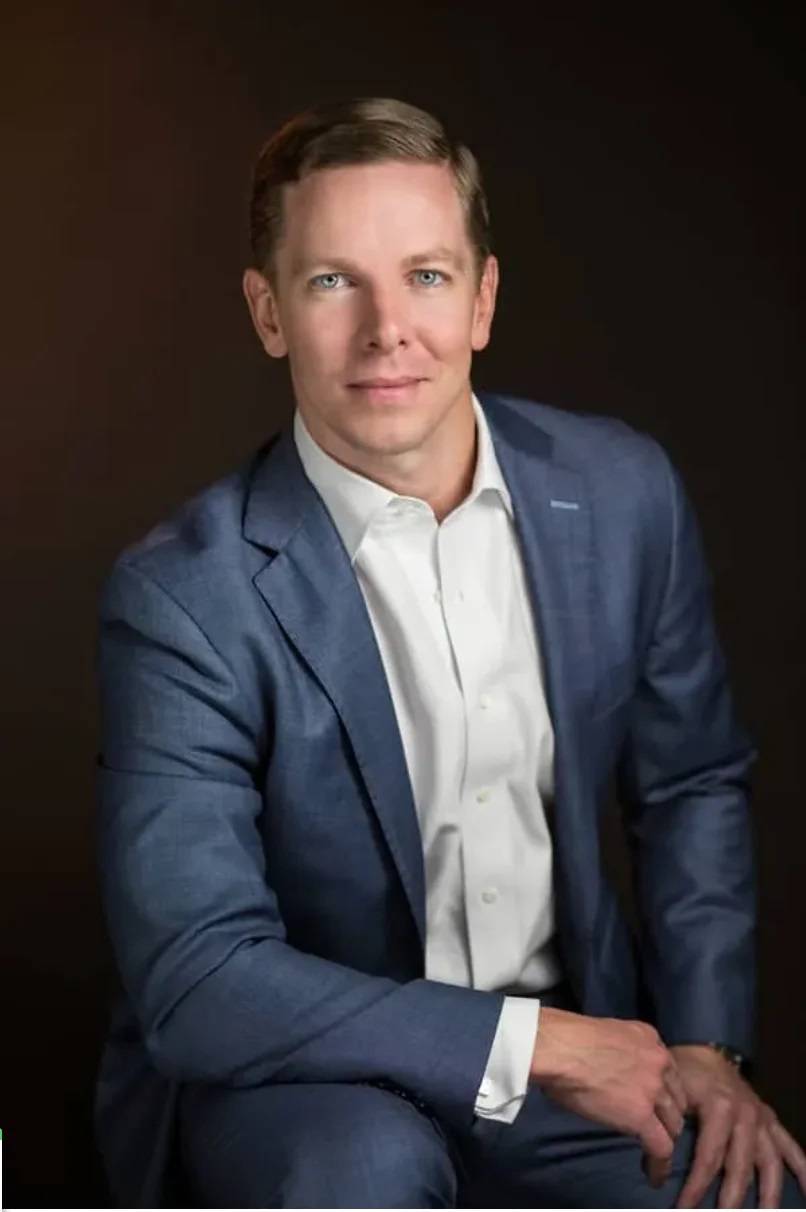
Dealing with the murky policies of insurance companies designed to confuse and prevent you from receiving compensation is our expertise.
15+ years experience as a personal injury attorney.
Specialized in battling insurance companies.
95% settlement rate for clients.
Handled 450+ personal injury cases.
Collected more than $50 million for clients.
450+ people have chosen Andrew as their attorney.