

Slip and Fall Lawyer in Titusville
Andrew Pickett Law is a top Titusville slip and fall law firm that handles fall injury cases throughout Titusville and North Brevard County for victims who need help getting medical treatment and financial recovery. In their reviews, clients single out never having to chase us for an update, which helps when you fear nobody believes you fell.

520+ Google reviews
Free Case Evaluation
*By submitting this form, you agree to our disclaimer.
What You Need To Know
- A fall claim looks simple and isn’t, because the law makes you prove something about the store rather than about the floor. An attorney who handles fall claims does the proving for you.
- Everything here is yours to use, with us or without us. We’d rather you knew where you stand than called us.
- Not seeing the spill doesn’t end your claim. Your share of the blame shrinks what you get back, and only a share above half stops the claim.
- You don’t get automatic insurance for your medical bills after a fall, the way you do after a car crash. Your health insurance pays the hospital while the claim gets built.
- You’ve got two years to file, not the four years many pages still say.
- The store doesn’t have to keep the video of your fall, and most systems record over it in days or weeks.
- Photograph the spill before anyone mops it, and get a written request to save the footage in front of the business within a week.
- Andrew Pickett prosecuted cases in the same circuit where a Titusville fall case is tried, and he takes cases to a jury.
- The spill itself. The spill’s dirt, cart tracks and drying edges show how long it sat there. An employee usually mops it within minutes of a reported fall, and the proof goes with it.
- The store’s cameras. They recorded the aisle before you ever reached it. The system records over the footage on a cycle of days or weeks unless a written request arrives first.
- The floor-check log. Employees initial the times they walked each section. The store keeps it, and the log becomes reachable once a claim is under way.
The fall itself probably took less than a second. One moment you were walking toward the checkout, and the next you were on the floor with strangers looking down at you. Most people get up as fast as their body allows and tell the nearest employee they are fine. Then they leave, wishing the whole thing had never happened.
Telling the room you are fine is a reflex with an audience watching, not a medical finding. Knees, hips, wrists and backs routinely feel manageable until the next morning. If anything hurts, see a doctor now and describe exactly how you landed.
The second-guessing usually starts on the drive home. You never saw whatever was on the floor, so part of you has already decided the fall was your own fault. A second worry tends to arrive behind the first. Nothing seems to prove the fall happened the way it happened, so a claim feels like your word against a company’s. Both of those worries have answers.
Florida treats one kind of fall under rules of its own. Something was on the floor of a business that had no business being there. A spilled drink, a dropped grape, or rainwater tracked in past the mats all count. A fall caused by the building itself, by a broken step or a dark stairwell, runs under different rules and has its own page. Start with the filing deadline and what the law makes you prove, then partial fault, what a claim pays, what a lawyer costs, and what to do this week about the proof.
What You Can Still Do This Week
The store probably mopped the spill within minutes of your fall, and nobody at the store is saving the video for you. You’ve still got moves left, and a week is long enough to make them.
Photograph the spot if you can get back to it, and photograph your bruising as it develops. If a friend was with you, ask that friend to write down what they saw while the fall is fresh.
Ask the business in writing to preserve the camera footage of your fall. Most systems record over the footage on a cycle of days or weeks, and a written request stops the cycle for your aisle.
See a doctor and describe exactly how you landed. No automatic insurance pays your first medical bills after a fall the way it does after a car crash, so your health insurance carries the hospital while the claim gets built.
Do You Have a Claim Against the Store?
You don’t have a claim just because you fell on a store’s floor. Florida asks a narrower question: did the store know about the spill, or should the store have known?
The time the spill sat on the floor decides the notice question more often than anything else does. Dirt, cart tracks and a drying edge tell an expert the spill had been there a while, and a spill that sat a while is a spill the store should have found.
A spill that keeps happening in the same spot counts against the store too, and so does a floor-check log with nobody’s initials on the hour you fell.
Not seeing the spill yourself doesn’t end your claim. Your share of the blame reduces what you collect, and only a share above half stops the claim entirely.
Florida runs a fall on a broken step or a dark stairwell under different rules, and what the store knew counts for less on a staircase.
A Fall Claim You Can Settle Yourself, and the Kind You Can’t
Plenty of fall claims settle without a lawyer. If a doctor treated you once, the store’s insurer accepted responsibility, and the offer covers the bill, take the offer and keep the whole of it.
The claims that go wrong go wrong in the first two weeks, before anybody tells you a claim’s in trouble.
A store’s insurer doesn’t have to tell you the footage is about to be recorded over. Nobody has to tell you the floor-check log exists. An adjuster can accept your medical bills and still argue you caused the fall, and the argument arrives after the proof is gone.
Call us before the first two weeks run out, even if you plan to handle the claim yourself. We’ll tell you what proof still exists and what a written request needs to say. The review costs nothing and puts you under no obligation.
What a Fall Lawyer Costs You Before Anything Is Recovered
Most people are embarrassed to ask what a lawyer costs, so we answer the question first. Andrew Pickett Law works on a contingency fee only. We take a percentage of whatever we recover for you, and we charge no fee at all if we recover nothing. You’ll never write us a check to get started, and you’ll never see an hourly bill.
Florida law caps a contingency percentage, so no firm sets its own ceiling. Our Titusville personal injury page sets out the figures themselves and the Bar rule behind them. We back the Bar’s cap with a commitment of our own. We work your case to its maximum value, and we spend money on the case long before a settlement arrives. We pay the filing fees, we order the medical records, and we hire the experts, and no bill reaches you while you’re still healing.
Ask any firm you talk to, including us, who pays the advanced costs if you lose. Firms answer the question differently, so get the answer in writing before you sign anything.
We’ll Call You Even When the News Isn’t Good
Before he represented injured people, Andrew Pickett prosecuted cases in the Eighteenth Judicial Circuit. Brevard judges try Titusville fall cases in the same circuit. He has taken injury cases through jury verdict, and he trained at the Trial Lawyers College. An insurance carrier prices a file differently when the lawyer on the other side has taken cases to a jury.
Clients tell us the same thing in their reviews: they always knew what was happening in their own case. Someone who fell in a store usually arrives half-convinced that nobody believes them. We’ll tell you what just happened in your case, what the next step is, and roughly when it comes. When something changes, we’ll call you, including when the news isn’t the news you wanted.
Call and We’ll Tell You What Proof Is Still Out There
A first call is a conversation, not a commitment. You describe the fall and where it happened, and we’ll tell you what proof is probably still there and how long it lasts.
Bring the date, the store and the name of anyone you reported the fall to. You can call with no paperwork at all.
If Andrew Pickett Law takes your case, our fee comes out of a recovery and nothing comes out of your pocket while the case runs. If the claim doesn’t need a lawyer, we’ll tell you and you can take the offer.
You Have Two Years to File, and Far Less Time Than That to Prove It
You have two years from the fall to file your claim in court.1 The Legislature cut that period from four years in March 2023. A page still advising four years describes a law that no longer exists. Anyone planning around four years is planning around two years they do not have. Shorter notice clocks apply when a government body owns the property, and our Titusville personal injury page covers them.
Two years is the outside limit for filing, not the useful window. The evidence that decides a fall case is mostly gone within days. The store mops the spill within minutes, the video records over itself on its own cycle, and staff move on to other jobs. The two-year deadline rarely ends a claim, and that shorter clock often does.
take action / Step 3 We fight for you. Same block used on /melbourne/ and /titusville/.]
Falling on a Store’s Floor Does Not Make the Store Responsible
Most people expect a fall inside a store to be the store’s problem. A business does not pay for your fall simply because you fell inside it, and Florida puts the proving on you.
When the hazard was something that landed on the floor and did not belong there, you can show the business actually knew the substance was there. You can also show it sat there long enough, or came back often enough, that a careful business should have known. A store paying reasonable attention would have found the hazard and cleaned it up.2 The statute names that kind of hazard a transitory foreign substance. It covers the spill in the grocery aisle, the puddle inside a restaurant door, and the grapes on the tile by the produce bins.
Proving a store should have known has a name of its own. Lawyers call it constructive knowledge, and it decides far more of these cases than actual knowledge does. Businesses almost never admit that an employee saw the spill, and you will rarely find a customer who reported it. The real fight is about time and pattern rather than about a confession.
The constructive-knowledge rule surprises people in both directions. A reader who assumed the store is automatically liable learns that it is not. A reader who assumed there is no case because nobody knew learns that the law never required the store to be told.
A broken step or a dark stairwell is a different case with different rules
The proof burden above belongs only to falls caused by something spilled, dropped or tracked onto a floor. Ordinary negligence rules govern a fall caused by the property itself, with no special knowledge statute attached.2 A stair that gave way, a walkway with no lighting, or a missing handrail all sit in that other group. So does an attack that better security would have stopped. Our Titusville premises liability page covers those cases at full depth. It also covers falls on government property and injuries at rented vacation homes.
Not Seeing the Spill Does Not Cost You the Case
You are probably carrying more of the blame for this than the law gives you. A jury splits blame in a fall case into percentages. Your percentage reduces what you get back rather than deciding whether you get anything, up to one hard line. A person found more than 50 percent responsible for their own injury collects nothing.3 At 50 percent or less, the recovery shrinks by exactly that share.
The arithmetic is easy to picture. A $100,000 case with 30 percent of the fault on you pays $70,000. The same case at 51 percent pays nothing. That cliff is why the store’s arguments about your role are never small talk.
The insurer will ask a predictable set of questions: what shoes you had on, whether your phone was in your hand, and whether you walked past a yellow warning cone. Each of those questions aims to raise your percentage, not to lower the store’s. The same evidence answers every one of them. Photographs of the spill, video of the aisle, and the store’s own logs show where the cone stood and how long the floor stayed wet. Not watching the floor is ordinary shopping behavior, and the people on a Brevard jury are shoppers too.
The blame-splitting rule has a branch that works differently, and it belongs to injuries caused by people rather than by spills. Suppose someone lawfully on business property is hurt by the criminal act of a third party. That covers an assault in a parking lot or a robbery that turned violent. The claim might run against that property’s owner, lessor, operator or manager. In that claim, the jury must weigh the fault of every person who contributed to the injury. That includes the person who committed the crime.4 The jury subtracts the criminal’s share from the property owner’s share. That arithmetic shapes security cases from their first day. A fall on a wet floor is not one of those cases. If an attack rather than a spill put you in the hospital, our Premises Liability Lawyers page covers security claims in full.
A Fall Claim Comes With No Insurance Behind It the Way a Crash Does
People expect a fall claim to work like a car crash claim, and the money starts from a different place. A crash opens a coverage that pays medical bills no matter who caused it. A fall opens nothing of the kind. Your own health insurance pays the hospital while the claim gets built, and the settlement pays that back at the end.
The number your case gets measured by is smaller than the number on your bill. Where your health insurance has already paid the hospital, a jury sees what was actually paid, not the larger figure the hospital printed. Where a bill is still unpaid, which is the usual position when a hospital has filed a lien, the jury sees what it would take to satisfy that bill, which is still well below the printed charge.5 The Legislature changed the evidence rules in 2023, and a lot of headline numbers shrank. Our Titusville personal injury page covers how you prove medical damages.
A hospital can also stake a claim on the settlement before you ever see it. Brevard is one of the few Florida counties where a hospital can hold a legal claim on your settlement money, called a lien. The hospital files it with the Clerk of the Circuit Court within ten days of your discharge.6 A settlement signed around an unresolved lien creates a problem for whoever accepted the money. Our Titusville personal injury page covers finding liens and clearing them.
The Store Will Mop Up the Proof Within Minutes of Your Fall
The evidence that decides your case has a short life, and nobody is doing anything wrong when it disappears. The store cleans its floors, the video records over itself, and employees move on. The law does let you prove how long the spill was there using ordinary details rather than a confession.2 Those details start vanishing while you are still at the front of the store giving somebody your name. The spill, the video and the floor-check log carry that proof, and each runs on its own clock.
How long the spill sat there decides your case
A liquid on a floor keeps a rough clock. A drink dropped seconds before you got there sits in a clean, tight pool. A drink that has been down for half an hour looks different. It has cart tracks through it, footprints leading away, dirt mixed in, and edges beginning to dry. Details like those are how length of time gets proven.2 At the scene, photograph the substance itself up close, before anyone cleans it. That helps more than anything else you do. The mop that removes the hazard also removes the evidence of how long the hazard existed.
A spill that keeps happening counts against the store
Time is not the only route to a case. The statute’s second path asks whether the condition occurred with regularity. A spill does not need to be old if it was predictable.2 Think of a cooler that drips every afternoon, or a roof that leaks over the same aisle in every hard rain. An ice machine that scatters cubes across the tile does the same job. The law expects a business living with a repeating hazard to catch each repetition. Its own records usually show whether it did.
Suppose you slipped just inside the entrance of a grocery store on Garden Street during an afternoon storm. Water tracked past the mats is a hazard that renews with every customer who walks in. The statute asks exactly how the store handled the previous hour of that water.
You can look up part of a property’s history before any claim exists. Brevard County publishes every property’s code-enforcement history free of charge. Look up the property’s tax account number at bcpao.us, then search that number at brevardfl.gov/BASS, where closed and completed cases display immediately.7 The full walk-through, including how to reach still-active cases and Titusville’s own records office, is on the Premises Liability Lawyers page.
The store’s own floor-check log can prove nobody walked the aisle
Chain stores document their floor care. Somewhere in the back is a log, often called a sweep log, where employees initial the times they walked and checked each section. It becomes evidence once a lawsuit begins and the formal exchange of records, called discovery, reaches it.
The log helps you in either direction it fails. A two-hour gap means nobody inspected the aisle, so the spill could have sat there the entire time. We measure a log signed in perfect fifteen-minute intervals against camera footage showing that no employee entered the aisle at all. Either way, the store’s own paperwork describes how long a hazard could survive on its floor. That is the exact question the law makes you answer.
Nobody Is Saving the Video of Your Fall for You
The store’s own system is recording over the footage that matters most, and nobody there has a reason to stop it. No law requires a private business in Titusville to keep the video of your fall. Store cameras record onto a fixed amount of storage, and when it fills, the system writes over the oldest footage automatically. The business set that schedule when it bought the equipment, and your fall does not interrupt it.
The video that decides a fall case is not the two seconds of you going down. It is the aisle in the twenty minutes before. That stretch shows when the spill appeared, how visible it was, and every employee who walked past without stopping. Video of the fall proves you fell. Video of the twenty minutes before it can prove the store should have caught the spill, and only one of those wins the case.
People assume the law forces businesses to keep surveillance video, and in Florida it does not. Florida’s one 30-day video rule works in the opposite direction from that assumption. That rule speaks to owners of apartment complexes and other multifamily housing. An owner who keeps video for at least 30 days, along with other listed security measures, earns a legal head start called a presumption. A presumption is a starting assumption in the owner’s favor against certain claims about crimes on the property.8 Keeping the video there is a reward a landlord can qualify for, not a duty imposed on anyone. Nothing in that statute reaches the store or restaurant where you fell.
A written request changes the store’s position. Once a business receives written notice that its footage is evidence in a likely claim, destroying it has consequences. A judge imposes those consequences inside your case. The Florida Supreme Court held, in a case against Wal-Mart, that lost or destroyed evidence does not create a separate lawsuit. The remedies are sanctions within the existing case, up to instructing the jury to presume the missing video would have hurt the store.9 Every one of those remedies assumes footage that still existed when the request arrived. A request that reaches the business in week six protects nothing, because the cycle has already run. A letter that arrives within days preserves the twenty minutes that carry the case.
The request itself is a letter, usually called a preservation letter, and it should be specific. Name the date, the time, the spot inside the store, and every camera covering it. Ask for a window that includes at least the half hour before the fall. Send it in writing and keep proof that it was delivered. The broader evidence checklist, including everything else a preservation letter covers, lives on the Titusville personal injury page.
The County May Already Hold a File on the Store Where You Fell
An inspector may have documented the store’s problem before you ever fell in it, and that paperwork is public. Restaurant inspections in Florida come from a state agency, the Department of Business and Professional Regulation. Brevard County runs a food-establishment permit system of its own. It covers precisely the venues the state agency does not license. Those are grocery stores, food markets, meat markets, theatres, church and fraternal kitchens, and bars whose primary business is serving alcohol.10 A Titusville grocery store answers to the county for the conditions inside it, and county enforcement produces public records.
The county’s shutdown power names its own triggers. The ordinance itself lists the conditions that set the process off. Sewage backing up in the food preparation area is one, along with refrigeration that cannot hold safe temperatures and rodent or insect infestation. When the county health director finds any of them, the director reports to the chairman of the county commission. The chairman must immediately call a special meeting of the Board, and the Board may order the establishment’s permit suspended.10 A suspension order issued that way is a public record, and it enumerates the violations the county found.
For a fall case, a suspension order does one particular job. Suppose the Board once suspended the store over a backed-up drain in the same area. Your wet-floor fall then happened in a business with a dated, documented history of that exact condition. Pattern of recurrence is the second proof route described above, and here the county assembled it before you ever walked in. You can check whether such a record exists for the store where you fell, and checking costs nothing.
Frequently Asked Questions About Slip and Fall Claims
It was partly my fault for not looking down. Do I still have a case?
A fall that was partly your fault usually still supports a claim. A jury splits blame in percentages, and your share reduces what you recover rather than ending the claim. Only a share above 50 percent bars the claim entirely.3 Not watching the floor is normal shopping behavior. The store argues you should have looked in order to raise your percentage, not to end your case.
Nobody at the store knew about the spill. Does that end my case?
The law never required anyone to have told the store. Proving the business should have known works just as well as proving it did know, and that proof comes from time and pattern. Your case turns on how long the spill sat, whether the same hazard kept coming back, and what the store’s inspection log shows.2 Deciding you have no case because no employee admits seeing the spill gives up the exact route most of these cases are won on.
The store wrote a report about my fall and would not give me a copy. What now?
No law requires a private business to hand over the paperwork it writes about a fall, usually called an incident report. A refusal at the counter is normal rather than a bad sign. If the store lets you see the report, or asks you to sign anything, photograph every page while it is in your hands. The report keeps existing either way, and it becomes reachable once a claim is under way. A fall on government property runs by different rules. Public-records law reaches a city’s paperwork in a way it never reaches a private company’s. Our Titusville premises liability page covers falls on public property.
What if the store already recorded over the video?
Erased footage does not automatically end the case, and it does not automatically win it either. Suppose the footage was destroyed after the business received a written request to keep it. A judge can then impose consequences inside the case, up to telling the jury to presume the video favored you.9 Footage that cycled away before any request existed is usually just gone, with nothing attached to its absence. The date that request arrives decides which outcome you get. That is why a preservation request goes out within days rather than weeks.
I fell at a friend’s house, an apartment building, or a city property. Is this the right page?
A spill or a substance on the floor of a place of business is the fall we handle here. A fall at a private home runs under different rules, and so does a fall caused by the condition of a building. A fall on city, county or federal property runs under different rules again. Our Titusville premises liability page covers those falls. If you slipped on something in a store, a restaurant, a gas station or a hotel, you are in the right place. Everything above on this page applies to you.
wrongful death.]
References
- Fla. Stat. § 95.11(5)(a) — two-year limitations period for negligence, as amended by ch. 2023-15, § 28 of which applies the amendments to causes of action accruing after March 24, 2023 (approved and filed 24 March 2023; effective on becoming law).
- Fla. Stat. § 768.0755 — transitory foreign substance in a business establishment; the injured person must prove the business had actual or constructive knowledge and should have remedied the condition; (1)(a)–(b) constructive knowledge provable by circumstantial evidence of length of time or regular occurrence; (2) the section does not affect any common-law duty owed for other conditions.
- Fla. Stat. § 768.81(6) — modified comparative negligence; recovery barred for a party found greater than 50 percent at fault for their own harm.
- Fla. Stat. § 768.0701 — in an action against the owner, lessor, operator or manager of commercial or real property for injury caused by the criminal act of a third party, the trier of fact must consider the fault of all persons who contributed to the injury.
- Fla. Stat. § 768.0427 — evidence of medical damages; satisfied past charges limited to amounts actually paid, unpaid charges and future care proved by what is necessary to satisfy or provide them.
- Brevard County Code §§ 54-66 to 54-71 — liens for hospital care; ten-day filing with the Clerk of the Circuit Court; settlement around an unresolved lien actionable against whoever accepted the money.
- Brevard County Property Appraiser (bcpao.us) tax-account lookup and the Brevard County BASS portal (brevardfl.gov/BASS) — free public code-enforcement case history by tax account number.
- Fla. Stat. § 768.0706 — presumption against liability for owners and operators of multifamily residential property that implement the listed security measures, including video surveillance retained for at least 30 days.
- Martino v. Wal-Mart Stores, Inc., 908 So. 2d 342 (Fla. 2005) — no independent cause of action for first-party spoliation of evidence; the remedies are discovery sanctions and the adverse evidentiary inference within the underlying case.
- Brevard County Code, Ch. 54, Art. IV, § 54-128 — county permitting of food establishments not licensed by the state; emergency suspension through the Board of County Commissioners on conditions named in the ordinance; suspension orders as public records.
Other Case Types We Handle
- Car Accident
- Truck Accident
- Motorcycle Accident
- Uber & Lyft Accident
- Pedestrian Accident
- Bicycle Accident
- Scooter Accident
- Golf Cart Accident
- Boating Accident
- Airbnb and Vacation Rental
- Dog Bite
- Sexual Abuse
- Workers’ Compensation
- Wrongful Death
Areas and Zip Codes Served From Our Titusville Office
- Titusville — 32780 and 32796
- Mims and Scottsmoor — 32754
- North Brevard County
Our latest reviews on Google

Alonza Crowley
2 days ago
I am so pleased with the service provided by this firm. The staff answered all my questions and explained the processes going forward. I feel very confident that I will be represented well. Allison was a pleasure to talk to.

Paul Cruz
4 days ago
Tiffany and team, thank you.. if you’re looking for an exceptional team that goes above and beyond its them

Queen Jones
16 days ago
⭐⭐⭐⭐⭐ I highly recommend Andrew Pickett and his entire team! When I first started my case, I was frustrated and didn’t fully understand the legal process, and I initially gave them a one-star review. But Andrew and his team never gave up on me. They continued to stand by my side, worked extremely hard on my behalf, and stayed committed to getting my case resolved. What really stood out to me was their dedication and willingness to keep fighting for the best possible outcome. They handled my case professionally and worked hard to get it settled. I’m extremely grateful to Andrew Pickett and his entire team for everything they did for me. If you’re looking for a legal team that will stand beside you, work hard for you, and see your case through, I definitely recommend giving them a call. Thank you, Andrew Pickett and team, for all your hard work and dedication!

Kev Albaugh
25 days ago
After being in a serious car accident, I hired Andrew Pickett and his team in Melbourne to handle my case. From day one, Mr. Pickett treated me with genuine respect, compassion, and professionalism. He took the stress completely off my shoulders so I could focus on recovering. I would also like to recognize Lindsay, Jeremy, Vonda, and Caroline for always keeping me updated throughout the entire process and addressing any questions or concerns I may have had. Thanks to Andrews incredible expertise and relentless advocacy, he secured a phenomenal outcome that exceeded all of my expectations. If you are looking for an honest, hardworking personal injury attorney on the Space Coast who delivers real results, look no further than Andrew Pickett Law. They are the best in the business.

Robbi Sandkulla
27 days ago
When my fiancé was in a serious car accident, we were completely overwhelmed, but Andrew Pickett and his team were an absolute blessing. They stepped in immediately, handled every detail with the insurance companies, and kept us updated every step of the way. Seeing how much stress they lifted off his shoulders was a huge relief. Andrew fought hard and won an amazing outcome for his case. We are so incredibly grateful for this firm's dedication and highly recommend them!

Teresa Wyatt
1 month ago
The Team at Andrew Pickett has been great, so far. Extremely quick, and thorough. Wasted no time, in getting my case started.

Alondra “Alo” Ruiz
1 month ago
Very friendly and helpful. Love that they give back to the community.

Angela Oravits
2 months ago
We truley appreciate the kindness and helping us and many with a back pack. It was great to meet Andrew and Thank him for his kindness.

Jae is bae
2 months ago
That was so sweet of them, giving out free backpacks and supplies for the kids and making it easier for the parents to come up and just grab the backpacks and go to get home to their children. Love this event for people. I hope to see them next year as well.

K SN
2 months ago
⭐⭐⭐⭐⭐ I cannot say enough good things about my experience with Phindile at Andrew Pickett Law. From the moment she answered the phone, she was kind, compassionate, and truly listened to everything I had to say. After spending almost 16 months with another law firm where I felt completely ghosted and struggled with a lack of communication, I was feeling frustrated and unheard. Phindile spent nearly an hour on the phone with me, patiently listening to my concerns, answering my questions, and walking me through the process. She made me feel like my case actually mattered. In that one phone call, I received more communication, care, and reassurance than I had during my entire 16 months with my previous firm. Her professionalism, empathy, and willingness to help made such a stressful situation feel so much easier. If the rest of the team is anything like Phindile, I know I’m in good hands. Thank you for treating me with kindness and making me feel heard. I truly appreciate everything you’ve done.

marianne mattern
2 months ago
Andrew was a very nice person. Unfortunately they did not have shade for the people in the pre register line. Which left people with disabilities and non disabled left in the sun. They did provide little bottles of sunscreen and promo hand fans. Water was provided. Thank you for the kindness.

Rachael Brown
2 months ago
Thanks for your gracious contribution to our community
Injured in Titusville? We're Ready to Help.
Andrew Pickett Law has helped thousands of accident victims recover the compensation they deserve. Tell us what happened – we'll take it from there.
Start My Free Case ReviewNo upfront costs. No fees unless we win your case.
Meet Andrew Pickett
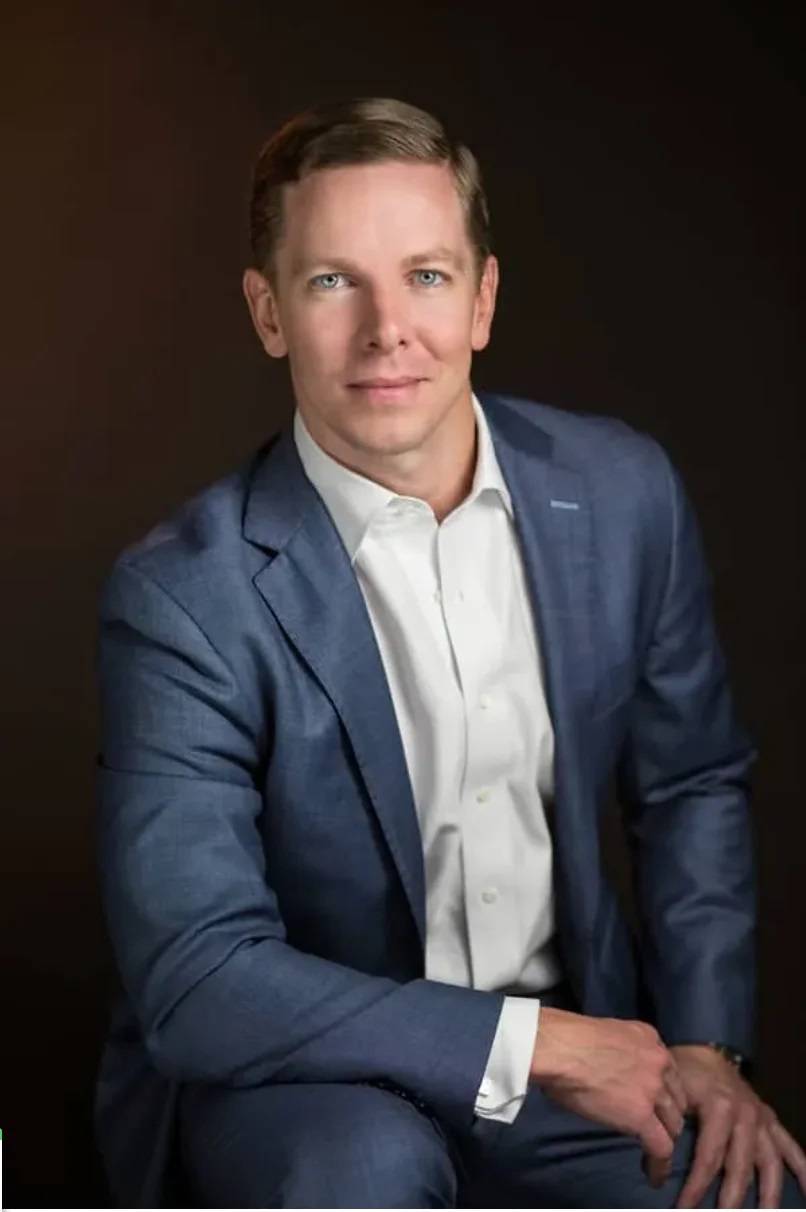
Dealing with the murky policies of insurance companies designed to confuse and prevent you from receiving compensation is our expertise.
15+ years experience as a personal injury attorney.
Specialized in battling insurance companies.
95% settlement rate for clients.
Handled 450+ personal injury cases.
Collected more than $50 million for clients.
450+ people have chosen Andrew as their attorney.